
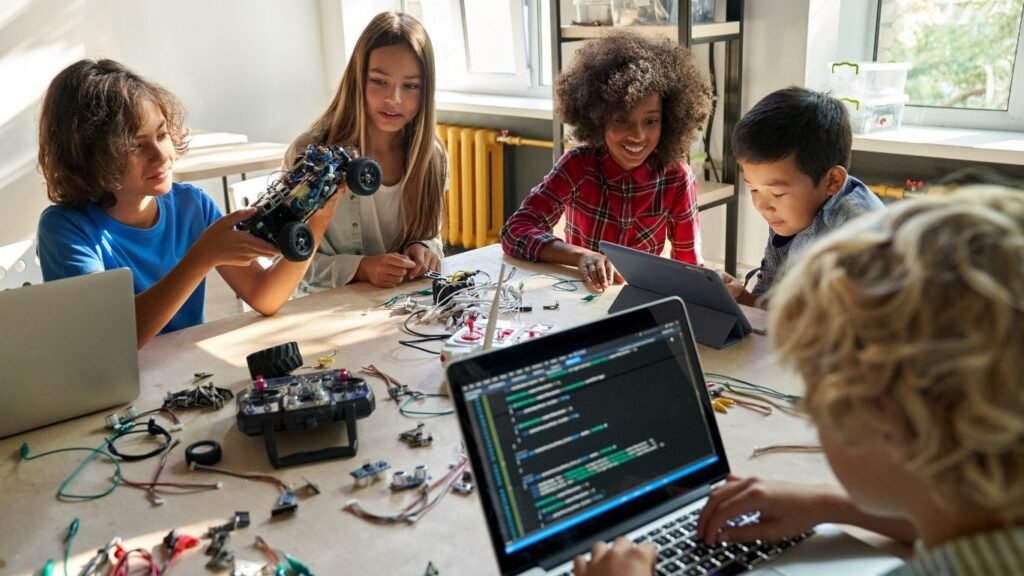
If you’ve ever wondered what age should kids start coding, you’re definitely not alone. It’s one of the most common questions parents ask today—especially as technology becomes a bigger part of everyday life. From smartphones to smart homes, coding is quietly shaping the world around us. So naturally, many parents want to give their kids a head start.
But here’s the good news: there isn’t one “perfect” age. Instead, it’s about how and when you introduce coding in a way that feels fun, natural, and engaging for your child.
Let’s walk through it together in a simple, conversational way—just like we’re chatting over coffee.
So, What Age Should Kids Start Coding?
The short answer?
Kids can start learning the basics of coding as early as 5 to 7 years old.
That might sound surprising at first. Coding seems complex, right? But when it’s taught properly—through games, storytelling, and visual tools—it becomes something kids genuinely enjoy.
At EduPodz, we believe coding isn’t just about writing lines of code. It’s about helping kids think creatively, solve problems, and build confidence.
Why Starting Early Actually Helps?
Think about how kids learn languages. The earlier they start, the easier it becomes. Coding works in a similar way.
When kids are introduced to coding early, they develop:
Logical thinking skills
Problem-solving abilities
Creativity and imagination
Confidence in using technology
And here’s the best part—they don’t even realize they’re “learning.” It feels like play.
Breaking It Down by Age Group
Instead of focusing on one exact age, it’s more helpful to look at stages. Every child develops differently, so this gives you flexibility.
Ages 5–7: Learning Through Play
At this stage, coding should feel like a game.
Kids aren’t typing code yet—instead, they’re:
Solving puzzles
Using visual blocks
Learning sequencing (what comes first, next, and last)
This builds the foundation of coding without overwhelming them.
👉 Think of it as learning the alphabet before writing sentences.
Ages 8–10: Building Confidence
Now things start getting more exciting.
Kids in this age group can:
Create simple animations or games
Understand basic coding concepts
Start experimenting with beginner-friendly platforms
They begin to see how their ideas can come to life on a screen—which is incredibly motivating.
Ages 11–13: Real Coding Begins
At this stage, kids are ready for more structured learning.
They can:
Learn beginner programming languages
Build small projects (games, apps, websites)
Understand how coding works in real-world scenarios
This is often when interest turns into passion.
Ages 14+: Exploring Future Paths
Teenagers can dive deeper into:
Advanced programming languages
App and web development
Robotics and AI basics
For some, this even becomes a potential career path.
Signs Your Child Is Ready for Coding
Instead of focusing only on age, look for these signs:
They enjoy solving puzzles or challenges
They’re curious about how apps or games work
They like building or creating things
They ask “how” and “why” a lot
If that sounds like your child, they’re probably ready to start coding in some form.
What If My Child Isn’t Interested?
That’s completely okay.
Not every child will be excited about coding right away—and that’s normal.
The key is how it’s introduced.
Instead of saying, “Let’s learn coding,” try:
“Let’s make a game together”
“Want to create your own animation?”
“Let’s build something cool”
When coding feels like creativity instead of a subject, kids are much more open to it.
Why Coding Is More Than Just a Skill
Here’s something many parents don’t realize: coding isn’t just about becoming a programmer.
It helps kids develop life skills like:
Critical thinking
Patience and persistence
Problem-solving
Creativity
Even if your child never becomes a software developer, these skills will help them in any career.
How EduPodz Makes Coding Easy for Kids?
At EduPodz, we understand that every child learns differently. That’s why our approach focuses on:
1. Fun First, Learning Second
We turn coding into an enjoyable experience through interactive activities and projects.
2. Step-by-Step Guidance
No overwhelming concepts—just simple, easy-to-follow lessons that build confidence.
3. Real Creativity
Kids don’t just learn—they create. Games, animations, and projects that they’re proud of.
4. Supportive Environment
We make sure kids feel encouraged, not pressured.
Because when kids feel comfortable, they learn better.
Common Myths About Kids and Coding
Let’s clear up a few misconceptions.
“Coding is too hard for young kids”
Not true. When taught properly, even young kids can understand basic concepts.
“My child needs to be good at math”
Coding helps develop logical thinking—it doesn’t require advanced math skills at the start.
“It’s only for future programmers”
Coding is becoming a basic skill, like reading or writing. It’s useful in almost every field.
Tips for Parents Getting Started
If you’re thinking about introducing your child to coding, here are some simple tips:
Keep it fun
Avoid turning it into a strict lesson.
Start small
Short sessions work better than long ones.
Celebrate progress
Even small achievements build confidence.
Be patient
Every child learns at their own pace.
Final Thoughts
So, what age should kids start coding?
The real answer is: whenever they’re curious and ready to explore.
For most kids, that can be as early as 5 or 6—but what matters more is how they start.
When coding is introduced in a fun, engaging, and supportive way, it becomes something kids want to do—not something they have to do.
And that’s exactly what we focus on at EduPodz.
If you’re thinking about helping your child take their first step into coding, just remember—you don’t need to rush. Start simple, keep it fun, and let their curiosity lead the way.
Because sometimes, the best learning happens when it feels like play.
FAQs About “What Age Should Kids Start Coding”
What age should kids start coding?
Kids can start learning coding basics as early as 5 to 7 years old using visual and interactive tools. For more structured coding, ages 8–10 and above are ideal.
How do I know if my child is ready to start coding?
Look for curiosity in solving puzzles, interest in apps or games, and enjoyment in creating things. These signs show your child may be ready to start coding, regardless of age.
Is coding too difficult for young kids?
Not at all! When coding is taught through games, animations, and simple projects, even young children can grasp basic coding concepts easily.
Do kids need to be good at math to start coding?
No, math skills are not a prerequisite. Coding helps develop logical thinking and problem-solving, which can actually support math learning over time.
What are the benefits of starting coding early?
Starting coding early improves logical thinking, creativity, problem-solving skills, and confidence. It also introduces kids to technology in a fun and engaging way.