
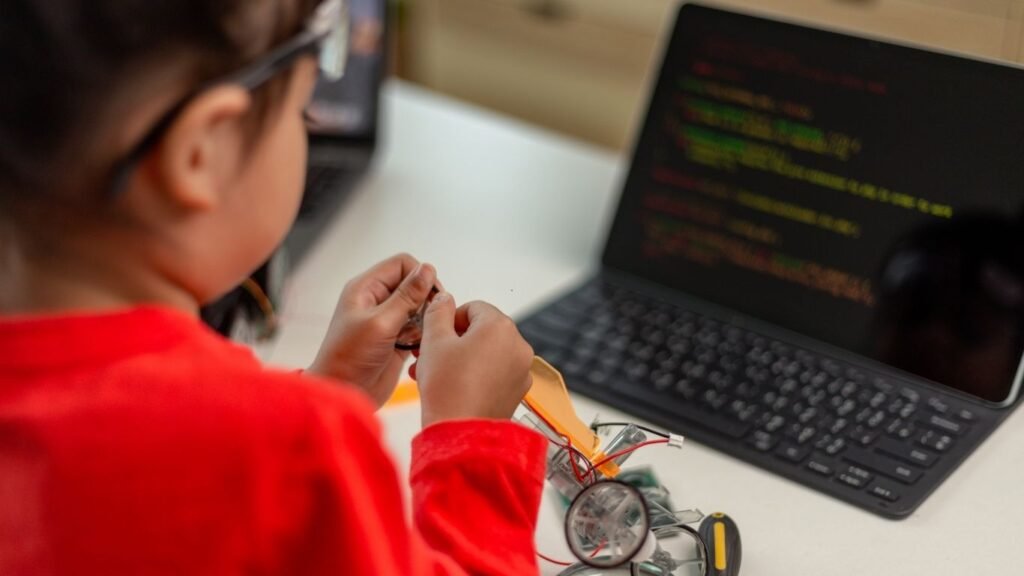
Picture this: your seven-year-old isn’t just playing a game on a tablet—they’re building one. They’re dragging colorful blocks of code, watching a character jump across the screen, and learning that they made it happen. That spark of creation? That’s tech education for children in action, and it’s transforming how kids see the world around them.
At Edupodz Junior, we believe every child deserves the chance to move from consumer to creator. But what exactly does tech education mean for young learners, and why does it matter so much right now? Let’s break it down together.
What Is Tech Education for Children, Really?
When we talk about tech education for children, we’re not talking about sitting kids in front of screens for hours. We’re talking about guided, age-appropriate learning experiences that teach kids how technology works—and how to use it thoughtfully.
This includes:
- Coding and programming basics through visual, block-based tools
- Robotics and physical computing where kids build things that move and respond
- Digital literacy skills like understanding online safety and evaluating information
- Creative tech projects involving animation, game design, and digital storytelling
The goal isn’t to turn every child into a software engineer. It’s to give them a foundation of logical thinking, creativity, and confidence that applies to any path they choose.
Why Start Young? The Case for Early Tech Learning
You might wonder: does a five-year-old really need to learn about coding? Here’s the thing—young children are naturally curious. They ask “why” and “how” constantly. Tech education for children channels that curiosity into structured exploration.
Building Problem-Solving Muscles
When a child writes a simple program and it doesn’t work, something powerful happens. They debug. They test. They try again. This process—called computational thinking—builds resilience and analytical skills that go far beyond computers.
A child who learns to break down a coding challenge into smaller steps is also learning to approach a tricky math problem, a science experiment, or even a social conflict the same way.
Confidence Through Creation
There’s a unique joy in making something that works. When kids complete a project—a simple animation, a blinking LED, a mini-game—they experience the satisfaction of bringing an idea to life. This creative confidence stays with them.
At Edupodz Junior, programs are designed so children experience these wins early and often. Small victories build momentum.
Preparing for an Evolving World
Let’s be honest: technology isn’t going anywhere. Whether your child becomes a doctor, artist, teacher, or entrepreneur, they’ll interact with technology daily. Understanding how it works—even at a basic level—gives them an advantage.
Tech education for children isn’t about predicting the future. It’s about giving kids the adaptability to thrive no matter what that future looks like.
What Makes Tech Education Effective for Young Learners?
Not all tech programs are created equal. Here’s what to look for when choosing tech education for children:
Age-Appropriate Content
A four-year-old and a ten-year-old need very different approaches. The best programs meet children where they are, using visual tools, hands-on activities, and playful challenges that match their developmental stage.
Balance of Screen and Hands-On Time
Great tech education doesn’t chain kids to devices. It blends screen-based learning with physical projects—building robots, creating circuits, or even programming movements for a dance routine. This variety keeps engagement high and learning holistic.
Supportive, Trained Educators
Technology is just a tool. The magic happens when skilled educators guide children through the learning process, asking the right questions and celebrating effort alongside outcomes.
Focus on Process, Not Just Product
The finished project matters less than what the child learned along the way. Did they persist when something broke? Did they help a peer? Did they try a new approach? These are the real measures of success.
Common Questions Parents Ask
Is my child too young for tech education?
Children as young as four can begin with unplugged activities—games and exercises that teach computational concepts without any screens at all. By age six or seven, many kids are ready for visual coding platforms.
Will this mean more screen time?
Quality matters more than quantity. Structured tech learning—where children actively create rather than passively consume—is fundamentally different from scrolling videos. Many programs, including those at edupodzjunior.edupodz.ca, intentionally incorporate offline activities.
What if my child isn’t “techy”?
That’s exactly who benefits most. Tech education for children isn’t just for kids who already love computers. It’s for the artist who discovers animation, the storyteller who builds interactive narratives, the builder who programs a robot to move. There’s an entry point for every interest.
How do I support this learning at home?
Ask questions. When your child shows you a project, ask how they made it. What was hard? What would they change? Your curiosity reinforces theirs.
The Bigger Picture: Skills That Transfer Everywhere
Here’s what tech education for children really teaches, underneath the coding and robotics:
Persistence — trying again when things don’t work
Creativity — imagining possibilities and making them real
Collaboration — working with others on shared projects
Communication — explaining ideas clearly
Critical thinking — questioning how and why things work
These aren’t just tech skills. They’re life skills.
Getting Started with EduPodz Junior
If you’re ready to explore tech education for children, edupodzjunior.edupodz.ca offers programs designed specifically for young learners. With a focus on hands-on learning, creative projects, and supportive instruction, it’s a space where children discover what they’re capable of building.
The best time to start? Whenever your child is curious. And if you’ve read this far, that curiosity might already be sparked.