adminbockup

how to teach coding to kids

If you’ve ever wondered how to teach coding to kids, you’re not alone. Many parents today understand that coding is becoming as important as reading and math. But the real question is — where do you even start? The good news? You don’t need to be a programmer to help your child learn coding. At Edupodz Junior, we believe coding should feel fun, natural, and exciting — not complicated or stressful. So let’s break it down in a way that actually works for kids (and makes your life easier too). Why Teaching Coding to Kids Matters? Before jumping into how, let’s quickly understand why. Coding is not just about computers. It helps kids develop: Logical thinking Problem-solving skills Creativity Confidence When kids learn coding early, they don’t just use technology — they understand how it works. And that’s a big advantage in today’s world. Start With the Right Mindset (Not Tools) One of the biggest mistakes parents make when thinking about how to teach coding to kids is focusing too much on tools or programming languages. Here’s the truth:Kids don’t need complex coding languages in the beginning. They need: Curiosity Fun Simple challenges Think of coding like learning a new language. You don’t start with grammar rules — you start with basic words and conversations. Make Coding Feel Like Play Kids learn best when they’re having fun. So instead of saying, Let’s learn coding try: Let’s build a game Let’s create a story Let’s make something move on screen This small shift makes a huge difference. At Edupodz Junior, we focus on game-based and interactive learning because it keeps kids engaged without feeling like they’re studying. Use Visual Coding Platforms First When thinking about how to teach coding to kids, always start with visual tools. These platforms use drag-and-drop blocks instead of typing code, making it easier for kids to understand logic without getting stuck on syntax errors. Benefits of visual coding: Easy to understand No typing mistakes Instant results Builds confidence Once kids are comfortable, they can move to real programming languages like Python or JavaScript. Focus on Logic, Not Perfection Here’s something important:Coding is not about getting it right the first time. It’s about trying, failing, and fixing. Encourage your child to: Experiment Make mistakes Ask “why didn’t this work?” This builds problem-solving skills, which is the real goal of coding. Break Learning Into Small Steps Kids can get overwhelmed easily. So when planning how to teach coding to kids, keep lessons: Short (20–30 minutes) Simple Focused on one concept at a time For example: Day 1: Moving a character Day 2: Adding sound Day 3: Creating a simple game Small wins keep kids motivated. Encourage Creativity Through Projects Instead of just teaching concepts, let kids build things. Projects make coding meaningful. Some simple ideas: Create a mini game Design an animated story Build a quiz Make a digital drawing When kids create something of their own, they feel proud — and that keeps them coming back to learn more. Learn Together (You Don’t Have to Be an Expert) Many parents hesitate because they don’t know coding themselves. But here’s the truth:You don’t need to be an expert to support your child. You can: Learn alongside them Ask questions together Celebrate small achievements This not only helps your child learn faster but also builds a stronger bond. Create a Consistent Learning Routine Consistency matters more than intensity. Instead of long sessions once a week, try: 20–30 minutes, 3–4 times a week This keeps learning steady and prevents burnout. At Edupodz Junior, we design programs that fit easily into a child’s routine, making learning both effective and enjoyable. Connect Coding to Real Life Kids understand better when they see real-world connections. Explain coding like this: Apps = built using code Games = created through coding Websites = designed with programming This helps kids realize that coding is not just a subject — it’s a skill used everywhere. Keep Motivation High Motivation is key when learning anything new. To keep kids excited: Celebrate progress Show their projects to family Encourage sharing with friends Reward effort, not just results Confidence plays a huge role in learning coding. When Should Kids Start Learning Coding? A common question parents ask is: “What’s the right age to start coding?” The answer:Kids can start as early as 6–7 years old with visual coding. The earlier they start, the more naturally they understand technology. But even older kids can learn quickly with the right guidance. Common Mistakes to Avoid While learning how to teach coding to kids, avoid these mistakes: Starting with complex programming languages Forcing long study hours Focusing only on theory Expecting quick results Comparing with other kids Every child learns at their own pace — and that’s perfectly fine. How Edupodz Junior Helps Kids Learn Coding? At Edupodz Junior, we make coding: Simple Interactive Fun Career-focused Our approach includes:✔ Step-by-step learning✔ Real-world projects✔ Beginner-friendly teaching✔ Focus on creativity and logic We don’t just teach coding — we help kids build skills for the future. Final Thoughts If you’re still thinking about how to teach coding to kids, remember this: Start simple Keep it fun Focus on learning, not perfection Coding is not just a technical skill — it’s a way of thinking. And when kids learn it the right way, it opens doors to endless possibilities. FAQs: How to Teach Coding to Kids What is the best way to start teaching coding to kids? Start with visual coding platforms and fun activities like games and animations. Keep it simple and engaging. Do kids need prior knowledge to learn coding? No, kids can start coding from scratch with beginner-friendly tools and guidance. How long should kids practice coding daily? 20–30 minutes per session is ideal for consistent learning without overwhelming them. Is coding difficult for kids to learn? Not at all. When taught in a fun and interactive way, coding becomes easy and enjoyable. Why should kids learn coding early? It helps develop problem-solving,

how to teach coding to kids Read More »
Robot Programming for Kids

Robot Programming for Kids: A Smart Start to Future Skills

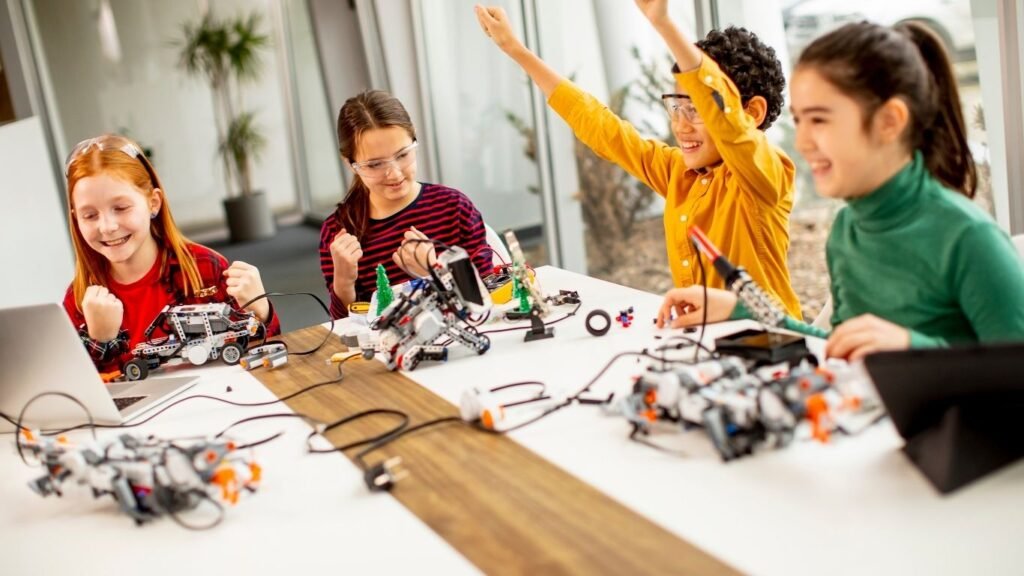
The future belongs to those who can create, not just consume technology. And the best time to start building those skills is during childhood. Robot programming for kids introduces children to the world of coding, logic, and innovation in a way that feels exciting—not overwhelming. It helps them develop confidence, creativity, and problem-solving abilities that go far beyond the classroom. With the right guidance from Edupodz Junior, kids don’t just learn—they start building the future. What is Robot Programming for Kids? Let’s keep it simple. Robot programming for kids means teaching children how to: Build robots using simple tools or kits Give instructions (coding) to make robots move or act Solve problems using logic and creativity Instead of just playing games, kids become creators. They learn how things work behind the scenes—and that’s a powerful shift. Think of it like this: instead of watching a robot move, your child learns how to make it move. Why is Robot Programming Important for Kids? You might wonder—why start so early? The answer is simple: kids learn best when they’re young, curious, and fearless. 1. Builds Strong Problem-Solving Skills When kids program a robot, things don’t always work perfectly the first time. That’s actually a good thing. They learn to: Identify problems Try different solutions Think logically This kind of thinking helps in academics and real life. 2. Encourages Creativity Robot programming isn’t just technical—it’s creative too. Kids can design robots to: Dance Follow a path Avoid obstacles Even interact with people It’s like combining art and science. 3. Boosts Confidence When a child builds and programs something successfully, it creates a strong sense of achievement. They start believing:“I can create things. I can solve problems.” And that confidence stays with them. How Robot Programming for Kids Works? At first glance, robotics might seem complicated—but for kids, it’s made simple and fun. Step 1: Understanding Basics Kids start with simple concepts like: Directions (forward, backward, left, right) Sequences (step-by-step instructions) Cause and effect Step 2: Learning Beginner Coding They use easy, visual coding platforms where they: Drag and drop commands Create simple programs Test their ideas instantly Step 3: Building Robots Using beginner-friendly kits, kids: Assemble parts Connect components Bring their ideas to life Step 4: Programming Actions Now comes the fun part—making the robot do something: Move Detect objects Follow commands It’s learning by doing—and kids love that. What Age is Best to Start? A common question parents ask is: “Is my child too young?” The truth is, kids as young as 6–7 years old can start learning robot programming. The key is to begin with age-appropriate tools and teaching methods. At Edupodz Junior, programs are designed to match different age groups, so children learn comfortably without feeling overwhelmed. Skills Kids Learn Through Robot Programming Robot programming for kids is not just about robots—it’s about building future-ready skills. Logical Thinking Kids learn how to think step-by-step and make decisions. Coding Fundamentals They understand the basics of programming, which is useful in many careers. Teamwork Many robotics activities involve collaboration, helping kids work with others. Patience and Persistence Not everything works instantly—and that’s where real learning happens. Real-World Benefits of Learning Robotics Early Let’s connect this to the bigger picture. Children who learn robot programming early are better prepared for careers in: Technology Engineering Artificial Intelligence Game development But even if they don’t choose these careers, the skills they gain—like critical thinking and creativity—are valuable everywhere. How Edupodz Junior Makes Learning Fun? Learning robotics shouldn’t feel like a classroom lecture. It should feel like an adventure. That’s exactly what Edupodz Junior focuses on. Interactive Learning Kids don’t just listen—they build, test, and explore. Step-by-Step Guidance Every concept is explained in a simple and easy-to-understand way. Real Projects Children work on fun projects that keep them engaged and excited. Safe Learning Environment Kids are encouraged to experiment, make mistakes, and learn without fear. Common Myths About Robot Programming for Kids Let’s clear up a few misconceptions. My child needs to be a genius. Not at all. Robotics is for every child, not just top students. It’s too technical. Modern tools are designed to be simple and beginner-friendly. It’s only for older kids. Even young children can start with basic robotics concepts. Tips for Parents to Get Started If you’re thinking about introducing your child to robot programming, here are a few simple tips: Start small—don’t overwhelm them Choose programs designed for kids Encourage curiosity and questions Focus on fun, not perfection And most importantly, let them explore at their own pace. The Future Belongs to Creators We’re moving towards a world where technology is everywhere. The question is—will your child just use technology, or will they create it? Robot programming for kids opens that door. It transforms kids from passive users into active creators. It teaches them not just how things work—but how to build something new. Final Thoughts If you want your child to develop skills that truly matter in the future, robot programming is one of the best places to start. It’s not just about robots.It’s about thinking differently.It’s about building confidence.It’s about preparing for tomorrow. With the right guidance from platforms like Edupodz Junior, your child can begin this exciting journey in a fun, engaging, and meaningful way. FAQs: Robot Programming for Kids Is robot programming safe for kids? Yes, absolutely. Programs are designed with child-friendly tools and safe learning environments. Does my child need prior coding knowledge? No. Beginners can start from scratch with simple concepts. How long does it take to learn? Learning is gradual. Kids can start seeing results within a few sessions. What tools are used in robotics for kids? Beginner kits, visual coding platforms, and simple programming interfaces are commonly used. Can robotics help in school studies? Yes, it improves problem-solving, math skills, and logical thinking. Yes, absolutely. Programs are designed with child-friendly tools and safe learning environments. No. Beginners can start from scratch with simple concepts. Learning is gradual. Kids can start seeing results

Robot Programming for Kids: A Smart Start to Future Skills Read More »

AI Education for Kids

AI Education for Kids: Preparing Young Minds for a Smarter Future

What if your child could not just use technology—but actually understand how it thinks? Today, kids are growing up in a world where artificial intelligence is everywhere—whether it’s voice assistants answering questions, apps recommending videos, or games adapting to how they play. But most children only experience AI as users, not creators. That’s exactly why AI education for kids is becoming so important. Instead of simply consuming technology, children can learn how to build, experiment, and think behind the scenes. They start asking better questions, solving problems creatively, and understanding how decisions are made in a digital world. At Edupodz Junior, the goal is simple: help kids move from passive screen time to active learning. Because when children understand AI early, they don’t just keep up with the future—they’re ready to shape it. What is AI Education for Kids? AI education for kids means teaching children the basics of artificial intelligence in a simple, fun, and interactive way. It doesn’t involve complex coding or advanced math at the start. Instead, it focuses on concepts like: How machines “learn” Recognizing patterns Understanding data Building simple AI-based projects Think of it as teaching kids how to think like problem-solvers rather than just users of technology. Why AI Education is Important for Kids? Let’s be honest—most careers in the future will involve some level of technology. AI is already transforming industries like healthcare, finance, gaming, and education. Here’s why introducing AI early makes a difference: 1. Builds Future-Ready Skills Children develop logical thinking, creativity, and problem-solving abilities. These skills go beyond coding—they apply to real-life situations. 2. Encourages Curiosity Kids naturally ask “why” and “how.” AI education nurtures this curiosity by helping them explore how things work behind the scenes. 3. Boosts Confidence When kids create their own AI projects—like a simple chatbot or game—they feel a sense of achievement that builds confidence. 4. Prepares for Career Opportunities AI is one of the fastest-growing fields. Early exposure gives kids a strong foundation for future careers. How AI Education for Kids Works? You might think AI is too complicated for children—but it’s actually taught in a very engaging and age-appropriate way. Interactive Learning Kids learn through games, puzzles, and hands-on activities rather than boring lectures. Project-Based Approach Instead of just theory, children build real projects like: Image recognition apps Simple recommendation systems Voice-based assistants Step-by-Step Progression Learning starts with basic concepts and gradually moves to advanced topics as kids grow. At Edupodz Junior, this structured approach ensures kids don’t feel overwhelmed and enjoy the learning journey. What Kids Learn in AI Education? AI education is not just about technology—it’s about thinking smarter. Here are some key skills children develop: Logical Thinking Understanding cause and effect helps kids make better decisions. Creativity AI projects encourage kids to build something new, not just follow instructions. Data Awareness Kids learn how data works and why it matters in decision-making. Problem-Solving AI teaches kids how to break down complex problems into smaller, manageable parts. AI Education vs Traditional Learning Traditional education often focuses on memorization. AI education, on the other hand, focuses on application. Traditional Learning AI Education Memorizing facts Solving real problems Passive learning Active participation Fixed answers Creative solutions Theory-heavy Practical projects This shift makes learning more engaging and meaningful for kids. When Should Kids Start Learning AI? There’s no “perfect” age, but many experts suggest introducing basic concepts as early as 6–8 years old. At this stage, kids can: Understand patterns Play logic-based games Explore simple coding tools As they grow, they can move into more advanced AI concepts. The key is to start early—but keep it fun and pressure-free. Common Myths About AI Education for Kids Let’s clear up a few misconceptions: AI is too difficult for kids Not true. When taught correctly, even young children can grasp AI basics. Kids need advanced math skills AI learning for kids starts simple—math comes later as they progress. It’s only for future programmers AI education benefits all kids, not just those interested in coding. Real-Life Benefits of AI Education Still wondering if it’s worth it? Here’s how AI education impacts kids in real life: Better Academic Performance Problem-solving and logical thinking improve performance in subjects like math and science. Improved Decision-Making Kids learn how to analyze situations before making choices. Digital Confidence Instead of being passive users, kids become creators of technology. How Parents Can Support AI Learning? You don’t need to be a tech expert to support your child. Here’s what you can do: Encourage curiosity and questions Provide access to structured programs Allow kids to experiment and make mistakes Choose platforms that focus on practical learning Programs like those offered by Edupodz Junior are designed to guide kids step-by-step while keeping learning fun. The Future of AI Education for Kids AI is not just a trend—it’s the future. And the earlier kids understand it, the better prepared they’ll be. In the coming years, AI education will likely become as important as reading and math. Schools may include it as part of the core curriculum, but starting early gives your child a clear advantage. Final Thoughts AI education for kids is not about turning every child into a programmer. It’s about helping them think smarter, solve problems, and adapt to a technology-driven world. When kids learn AI in the right way—through creativity, exploration, and hands-on projects—they don’t just gain technical skills. They gain confidence, curiosity, and a mindset that prepares them for the future. If you’re thinking about giving your child a head start, now is the right time. Because the future isn’t waiting—and neither should their learning. FAQs: AI Education for Kids What is AI education for kids? AI education for kids is a structured way of teaching children how artificial intelligence works in a simple and engaging manner. Instead of complex theory, kids learn through games, activities, and projects that help them understand concepts like machine learning, patterns, and decision-making. At what age should kids start learning AI? Children can start learning

AI Education for Kids: Preparing Young Minds for a Smarter Future Read More »

importance of STEM education

Why STEM Education is the Superpower Your Child Needs and How Edupodz Junior Delivers It!

Hi parents! Let’s talk about something that truly lights up a child’s future: STEM education. You’ve likely come across the acronym “STEM” – Science, Technology, Engineering, and Mathematics. But beyond the academic labels, what does it really mean for your child, and why are experts everywhere emphasizing its importance? Here at Edupodz Junior, we believe STEM is the key to unlocking your child’s innate curiosity and potential. It’s about empowering them with a unique superpower – the ability to explore, to question, to build, and to innovate. We’re convinced there’s no better time than now to spark that wonder and set them on a path of exciting discovery! The World is Changing, and STEM is Leading the Way Take a moment to look around. What do you see? Smartphones, smart homes, self-driving cars, incredible medical advancements… all of these wonders are products of STEM. The world your child is growing up in is powered by innovation, and this trend is only accelerating. From artificial intelligence to renewable energy, the jobs of tomorrow will demand a strong understanding of STEM principles. Without a solid STEM foundation, children might find themselves playing catch-up in a world that’s constantly moving forward. That’s why understanding the importance of STEM education isn’t just about getting good grades; it’s about preparing them for a future brimming with exciting possibilities. More Than Just Equations: The Real Benefits of STEM Education Now, let’s dive into the fantastic benefits your child gains from a robust STEM education. It’s so much more than memorizing formulas or dissecting frogs! 1. Critical Thinking & Problem Solving:This is perhaps the most crucial superpower STEM instills. Imagine your child faced with a challenge – maybe building a tower that won’t fall, or figuring out why a toy car isn’t moving. STEM encourages them to analyze the situation, brainstorm solutions, test their ideas, and learn from mistakes. This isn’t just about solving a puzzle; it’s about developing a mindset that tackles any obstacle with logic and creativity. 2. Unleashing Creativity & Innovation:“But wait,” you might say, “I thought STEM was all about logic, not creativity!” And that’s a common misconception! In reality, science, technology, engineering, and math are ripe with opportunities for creative thinking. Designing a new app, engineering a stronger bridge, or discovering a new way to solve an environmental problem all require immense creativity. STEM teaches children to think outside the box and invent new solutions. 3. Developing Digital Literacy:In today’s digital age, understanding technology isn’t an option; it’s a necessity. From coding to robotics, STEM education introduces children to the tools and concepts that shape our digital world. This isn’t just about screen time; it’s about understanding how technology works, how to use it responsibly, and even how to create with it. 4. Fostering Resilience and Grit:Have you ever tried to build something and it didn’t work the first time? That’s a classic STEM experience! Whether it’s a science experiment that goes awry or a coding project with a bug, STEM teaches children that failure is just a stepping stone to success. It builds resilience, teaching them to persevere, troubleshoot, and try again until they achieve their goal. 5. Building a Foundation for Future Careers:Let’s be real, parents. We want our children to have bright futures! STEM fields are among the fastest-growing and highest-paying sectors globally. From doctors and engineers to data scientists and environmentalists, a strong STEM background opens doors to a vast array of exciting and impactful careers. By investing in STEM education now, you’re investing in a future where your child has limitless career options. Edupodz Junior: Where Little Innovators Start Their Journey! At Edupodz Junior, we’re passionate about making STEM education engaging, accessible, and incredibly fun for young minds. We understand that traditional classroom settings don’t always capture the imagination of every child. That’s why we’ve designed programs that are hands-on, interactive, and tailored to spark curiosity. We don’t just teach subjects; we inspire exploration. Our approach focuses on: Experiential Learning: Children learn by doing! Whether it’s building a robot, conducting a simple chemical reaction, or designing a digital game, our activities are designed for active participation. Age-Appropriate Curriculum: We understand that a 4-year-old learns differently from an 8-year-old. Our programs are carefully crafted to introduce STEM concepts in a way that is relevant and exciting for each age group. Qualified & Enthusiastic Instructors: Our team is made up of educators who not only have a strong understanding of STEM but also a passion for teaching and inspiring young learners. A Nurturing & Stimulating Environment: We believe learning thrives in a supportive and fun atmosphere. Our classrooms are designed to encourage collaboration, experimentation, and joyful discovery. How We Make STEM “Talk” to Your Child You know how important it is for learning to feel like a conversation, right? At Edupodz Junior, we strive to make STEM feel just like that – an exciting chat about how the world works and how your child can be a part of shaping it. Imagine your child building a simple circuit and seeing a lightbulb light up. That’s not just a science lesson; it’s a moment of wonder, a “conversation” between them and the principles of electricity. Or perhaps they’re coding a small character to move across a screen – they’re having a “dialogue” with technology, learning its language and how to make it do their bidding. This isn’t about memorization; it’s about understanding and application. It’s about empowering your child to ask “Why?” and then helping them discover the “How?” The Future is Bright, and It’s Built on STEM The importance of STEM education cannot be overstated. It’s not just a set of academic subjects; it’s a way of thinking, a set of skills, and a pathway to a future filled with discovery and opportunity. By investing in STEM, you’re giving your child the tools they need to navigate a complex world, become innovative thinkers, and perhaps even be the ones to solve the challenges of tomorrow. At Edupodz Junior, we’re ready to partner with you

Why STEM Education is the Superpower Your Child Needs and How Edupodz Junior Delivers It! Read More »

How AI Helps Kids Learn

How AI Helps Kids Learn: A New Era of Smart Education

Imagine a world where learning feels less like a task and more like an exciting adventure. That’s exactly what Artificial Intelligence (AI) is bringing into education today. From personalized lessons to interactive learning tools, AI is quietly transforming how children understand, explore, and apply knowledge. If you’ve ever wondered how AI helps kids learn, you’re about to see why it’s becoming a game-changer—especially for modern education platforms like EduPodz Junior, where innovation meets child-friendly learning. What Does AI in Learning Actually Mean? Let’s keep it simple. AI in education refers to smart systems that can understand how a child learns and then adjust the learning experience accordingly. Instead of one-size-fits-all teaching, AI creates a custom learning journey for every child. Think of it like a personal tutor who knows: What your child struggles with What they enjoy learning How fast they grasp concepts And then adjusts everything in real time. How AI Helps Kids Learn Better 1. Personalized Learning Experience Every child learns differently. Some pick up math quickly, while others may need more time. AI identifies these differences and adapts lessons accordingly. For example: If a child struggles with fractions, AI provides extra practice If they excel, it moves them ahead to more advanced topics This means no child feels left behind—or bored. 2. Instant Feedback and Support Traditional learning often involves waiting for teachers to check work. With AI, feedback is immediate. Kids can: Know right away if an answer is correct Understand mistakes instantly Learn faster without frustration This keeps motivation high and builds confidence early on. 3. Interactive and Engaging Learning Let’s be honest—kids today are used to screens, games, and interaction. AI-powered learning platforms make education feel more like play. AI tools use: Gamified lessons Quizzes and challenges Visual and interactive content This keeps children engaged for longer and helps them actually enjoy learning. 4. Builds Strong Problem-Solving Skills One of the biggest advantages of AI learning is that it encourages thinking—not just memorizing. Children learn how to: Analyze problems Try different solutions Learn from mistakes This is especially important for future-ready skills like coding, logic, and critical thinking—areas that platforms like EduPodz Junior focus on. 5. Learning at Their Own Pace Not every child learns at the same speed—and that’s completely okay. AI allows kids to: Pause and revisit lessons anytime Skip ahead if they’re ready Practice without pressure This removes the stress of keeping up with others and creates a comfortable learning environment. 6. Encourages Curiosity and Exploration AI doesn’t just answer questions—it sparks more questions. When a child learns something new, AI systems often suggest: Related topics Deeper explanations Fun facts or challenges This keeps curiosity alive, which is the foundation of lifelong learning. 7. Makes Complex Topics Easy to Understand Subjects like coding, math, or science can feel intimidating. AI simplifies these concepts using: Step-by-step explanations Visual examples Real-life applications So instead of confusion, kids experience clarity—and even excitement. Real-Life Example: AI in Coding Education Let’s say a child is learning coding. Instead of just reading theory, AI-powered platforms: Guide them through interactive coding exercises Detect errors and explain them clearly Suggest improvements This hands-on approach makes learning practical and fun—something that traditional methods often miss. Why AI Learning Matters for Today’s Kids We’re living in a digital world where skills are evolving fast. Children need more than just textbook knowledge—they need digital confidence. AI helps kids: Become independent learners Build tech skills early Adapt to new challenges In simple terms, it prepares them not just for exams—but for life. Role of Parents in AI-Based Learning While AI is powerful, parental involvement still matters. Here’s how parents can support: Encourage kids to explore AI-based learning tools Monitor screen time and ensure balance Discuss what they learn to reinforce understanding When AI and parental guidance work together, learning becomes even more effective. Is AI Safe for Kids? This is a common concern—and a valid one. Good AI learning platforms prioritize: Child-safe environments No harmful content Data privacy Trusted platforms like EduPodz Junior are designed specifically for kids, ensuring a secure and supportive learning experience. The Future of Learning with AI AI is not replacing teachers—it’s enhancing learning. In the future, we can expect: Even more personalized education Virtual tutors available anytime Advanced skill-building from a young age And most importantly—learning that adapts to every child’s unique potential. Final Thoughts So, how AI helps kids learn comes down to one simple idea: it makes learning smarter, faster, and more enjoyable. Instead of forcing children into a fixed system, AI creates a system that adjusts to them. It builds confidence, encourages curiosity, and prepares kids for a world where technology and creativity go hand in hand. If you’re looking to give your child a learning experience that’s engaging, future-focused, and truly effective, exploring AI-powered education is a step in the right direction. Help your child learn smarter and grow faster with AI-powered programs at EduPodz Junior today.   FAQs: How AI Helps Kids Learn How AI helps kids learn more effectively? AI helps kids learn more effectively by creating personalized learning experiences based on each child’s pace, strengths, and weaknesses. It adapts lessons, provides instant feedback, and uses interactive methods to make learning easier and more engaging. How AI helps kids learn with instant feedback? AI-powered platforms provide immediate feedback on quizzes and activities. Kids can quickly identify mistakes, understand correct answers, and improve faster without waiting for teacher evaluation. How AI helps kids learn problem-solving skills? AI encourages kids to think critically by presenting challenges and guiding them through solutions. It promotes logical thinking, decision-making, and creativity—essential skills for future success. How AI helps kids learn beyond traditional classrooms? AI enables learning anytime and anywhere. Kids can access lessons, practice exercises, and explore new topics outside school hours, making education more flexible and continuous. How AI helps kids learn future-ready skills? AI helps kids develop essential skills like coding, critical thinking, and digital literacy. These skills prepare them for future careers and

How AI Helps Kids Learn: A New Era of Smart Education Read More »

Tech Education for Children

Tech Education for Children: Why Starting Early Shapes Tomorrow’s Problem-Solvers

Picture this: your seven-year-old isn’t just playing a game on a tablet—they’re building one. They’re dragging colorful blocks of code, watching a character jump across the screen, and learning that they made it happen. That spark of creation? That’s tech education for children in action, and it’s transforming how kids see the world around them. At Edupodz Junior, we believe every child deserves the chance to move from consumer to creator. But what exactly does tech education mean for young learners, and why does it matter so much right now? Let’s break it down together. What Is Tech Education for Children, Really? When we talk about tech education for children, we’re not talking about sitting kids in front of screens for hours. We’re talking about guided, age-appropriate learning experiences that teach kids how technology works—and how to use it thoughtfully. This includes: Coding and programming basics through visual, block-based tools Robotics and physical computing where kids build things that move and respond Digital literacy skills like understanding online safety and evaluating information Creative tech projects involving animation, game design, and digital storytelling The goal isn’t to turn every child into a software engineer. It’s to give them a foundation of logical thinking, creativity, and confidence that applies to any path they choose. Why Start Young? The Case for Early Tech Learning You might wonder: does a five-year-old really need to learn about coding? Here’s the thing—young children are naturally curious. They ask “why” and “how” constantly. Tech education for children channels that curiosity into structured exploration. Building Problem-Solving Muscles When a child writes a simple program and it doesn’t work, something powerful happens. They debug. They test. They try again. This process—called computational thinking—builds resilience and analytical skills that go far beyond computers. A child who learns to break down a coding challenge into smaller steps is also learning to approach a tricky math problem, a science experiment, or even a social conflict the same way. Confidence Through Creation There’s a unique joy in making something that works. When kids complete a project—a simple animation, a blinking LED, a mini-game—they experience the satisfaction of bringing an idea to life. This creative confidence stays with them. At Edupodz Junior, programs are designed so children experience these wins early and often. Small victories build momentum. Preparing for an Evolving World Let’s be honest: technology isn’t going anywhere. Whether your child becomes a doctor, artist, teacher, or entrepreneur, they’ll interact with technology daily. Understanding how it works—even at a basic level—gives them an advantage. Tech education for children isn’t about predicting the future. It’s about giving kids the adaptability to thrive no matter what that future looks like. What Makes Tech Education Effective for Young Learners? Not all tech programs are created equal. Here’s what to look for when choosing tech education for children: Age-Appropriate Content A four-year-old and a ten-year-old need very different approaches. The best programs meet children where they are, using visual tools, hands-on activities, and playful challenges that match their developmental stage. Balance of Screen and Hands-On Time Great tech education doesn’t chain kids to devices. It blends screen-based learning with physical projects—building robots, creating circuits, or even programming movements for a dance routine. This variety keeps engagement high and learning holistic. Supportive, Trained Educators Technology is just a tool. The magic happens when skilled educators guide children through the learning process, asking the right questions and celebrating effort alongside outcomes. Focus on Process, Not Just Product The finished project matters less than what the child learned along the way. Did they persist when something broke? Did they help a peer? Did they try a new approach? These are the real measures of success. Common Questions Parents Ask Is my child too young for tech education? Children as young as four can begin with unplugged activities—games and exercises that teach computational concepts without any screens at all. By age six or seven, many kids are ready for visual coding platforms. Will this mean more screen time? Quality matters more than quantity. Structured tech learning—where children actively create rather than passively consume—is fundamentally different from scrolling videos. Many programs, including those at edupodzjunior.edupodz.ca, intentionally incorporate offline activities. What if my child isn’t “techy”? That’s exactly who benefits most. Tech education for children isn’t just for kids who already love computers. It’s for the artist who discovers animation, the storyteller who builds interactive narratives, the builder who programs a robot to move. There’s an entry point for every interest. How do I support this learning at home? Ask questions. When your child shows you a project, ask how they made it. What was hard? What would they change? Your curiosity reinforces theirs. The Bigger Picture: Skills That Transfer Everywhere Here’s what tech education for children really teaches, underneath the coding and robotics: Persistence — trying again when things don’t workCreativity — imagining possibilities and making them realCollaboration — working with others on shared projectsCommunication — explaining ideas clearlyCritical thinking — questioning how and why things work These aren’t just tech skills. They’re life skills. Getting Started with EduPodz Junior If you’re ready to explore tech education for children, edupodzjunior.edupodz.ca offers programs designed specifically for young learners. With a focus on hands-on learning, creative projects, and supportive instruction, it’s a space where children discover what they’re capable of building. The best time to start? Whenever your child is curious. And if you’ve read this far, that curiosity might already be sparked.  

Tech Education for Children: Why Starting Early Shapes Tomorrow’s Problem-Solvers Read More »

Why Should Kids Learn Coding

Why Should Kids Learn Coding? A Practical Guide for Parents

Imagine your child creating their own game instead of just playing one. Sounds exciting, right? That’s exactly what coding makes possible. Today, learning how to code isn’t just for future programmers—it’s for any child who wants to think creatively, solve problems, and understand the world around them better. If you’re thinking about why should kids learn coding, you’re already on the right track. At EduPodz Junior, the focus is not just on teaching coding, but on helping kids develop real-world skills through engaging, hands-on learning. Let’s explore why coding is so important for children today—and how it can benefit them in ways you might not expect. 1. Coding Builds Strong Problem-Solving Skills One of the biggest reasons why kids should learn coding is that it strengthens their ability to solve problems. When children code, they learn how to break down complex tasks into smaller, manageable steps. For example, if a program doesn’t work, kids must figure out: What went wrong Why it happened How to fix it This process teaches logical thinking and persistence. Instead of giving up, kids learn to experiment, test, and improve—skills that are useful in school and everyday life. 2. It Encourages Creativity Many people think coding is only technical, but it’s actually highly creative. Kids can build: Games Animations Websites Apps Through coding, children turn their ideas into real digital creations. Platforms and structured programs like those offered by EduPodz Junior make this process fun and interactive, allowing kids to express themselves while learning valuable skills. 3. Prepares Kids for the Future Technology is everywhere, and it’s only growing. Understanding why kids should learn coding also means recognizing how important it is for future careers. Even if your child doesn’t become a software developer, coding knowledge is useful in many fields like: Medicine Engineering Business Design Learning coding early gives kids a strong advantage. It helps them understand how technology works instead of just using it passively. 4. Improves Logical Thinking Coding teaches kids how to think in a structured and logical way. Every piece of code follows a sequence, and children learn to: Organize their thoughts Follow step-by-step processes Make decisions based on logic This improves their performance in subjects like math and science and helps them think clearly in different situations. 5. Boosts Confidence and Independence When kids create something on their own—like a game or a simple app—it gives them a sense of achievement. They realize they can build things from scratch, which boosts their confidence. Coding also teaches independence. Kids learn to: Explore solutions on their own Learn from mistakes Keep improving their work At EduPodz Junior, children are guided in a way that builds both skill and confidence, making learning enjoyable and rewarding. 6. Enhances Digital Literacy Today’s children are surrounded by technology. But there’s a big difference between using technology and understanding it. Knowing why kids should learn coding includes helping them become digitally literate. They learn: How apps and websites work Basic computer science concepts Safe and smart use of technology This knowledge makes them more informed and responsible users of digital tools. 7. Develops Patience and Resilience Coding doesn’t always work perfectly the first time. Kids often face errors or bugs, and fixing them requires patience. Through coding, children learn: It’s okay to make mistakes Success comes with practice Challenges are part of learning These lessons build resilience, which is valuable in every aspect of life. 8. Encourages Teamwork and Communication Many coding activities involve collaboration. Kids work together to solve problems, share ideas, and build projects. This improves: Communication skills Teamwork Ability to explain ideas clearly Programs like those at EduPodz Junior often include interactive sessions where kids learn not just coding, but also how to work effectively with others. 9. Makes Learning Fun and Engaging Traditional learning methods can sometimes feel boring for kids. Coding introduces a fun and interactive way to learn. Instead of just reading or memorizing, kids: Build projects Play with ideas See instant results This keeps them engaged and excited about learning. 10. Builds a Strong Foundation for Innovation Understanding why kids should learn coding also means recognizing its role in innovation. Today’s kids are tomorrow’s creators. With coding skills, they can: Build their own apps Solve real-world problems Turn ideas into reality Early exposure to coding helps them think like innovators and creators, not just consumers. Why Choose EduPodz Junior for Coding Classes? When it comes to learning coding, the right guidance matters. EduPodz Junior offers structured and engaging programs designed specifically for kids. What makes it stand out: Beginner-friendly approach Focus on practical learning Interactive and fun sessions Real-world project exposure The goal is not just to teach coding but to develop essential life skills that help kids grow in every way. Final Thoughts So, why should kids learn coding? Because it’s more than just a technical skill—it’s a life skill. Coding helps children think better, create more, and prepare for a future driven by technology. It builds confidence, creativity, and problem-solving abilities while making learning enjoyable. Starting early gives kids a strong foundation that benefits them for years to come. If you’re looking to give your child an edge in today’s digital world, introducing them to coding is one of the smartest decisions you can make—and platforms like EduPodz Junior make that journey simple, effective, and fun. FAQs: Why Should Kids Learn Coding? Why should kids learn coding at an early age? Kids should learn coding early because their brains are more adaptable and curious at a young age. Learning coding helps them develop problem-solving skills, logical thinking, and creativity from the start. It also makes it easier for them to understand technology as they grow. Why should kids learn coding instead of just using technology? Most kids today know how to use apps and games, but coding teaches them how these tools actually work. Understanding why should kids learn coding means helping them become creators, not just consumers of technology. At what age should kids start

Why Should Kids Learn Coding? A Practical Guide for Parents Read More »

Scratch Programming Classes

Unlock Your Child’s Creative Potential with Scratch Programming Classes!

Hey there, amazing parents! Are you constantly amazed by your child’s curiosity, their endless questions, and their knack for figuring things out? Do they love games, stories, and bringing their ideas to life? What if I told you there’s a fantastic way to channel all that brilliant energy into something truly powerful and fun: Scratch programming classes! At Edupodz Junior, we’re all about empowering young minds. We believe that learning should be an adventure, a place where imagination takes flight and skills are built without even feeling like “work.” That’s exactly what Scratch programming offers, and we’re thrilled to be your guide on this exciting journey. What Exactly is Scratch Programming, Anyway? You might be thinking, “Programming? Isn’t that super complicated and just for computer whizzes?” Absolutely not! That’s the beauty of Scratch. Imagine building with LEGOs, but instead of physical bricks, you’re using colorful, interlocking “code blocks” on a computer screen. That’s Scratch in a nutshell! Developed by the brilliant minds at MIT, Scratch is a visual programming language designed specifically for kids (ages 8-16, though younger and older learners love it too!). With Scratch, your child can: Create their own animated stories: Think interactive cartoons starring characters they design! Design and play their own video games: From simple maze games to complex platformers. Build interactive art projects: Where their drawings come alive with sound and motion. Develop simulations: Like a solar system model or a virtual pet. Make music and sound effects: Composing their own tunes or adding cool audio to their projects. The possibilities are truly endless, and it all starts with those simple, drag-and-drop blocks. No tricky syntax, no confusing lines of text – just pure, creative problem-solving! Why Are Scratch Programming Classes So Important for Kids Today? In our rapidly evolving world, digital literacy isn’t just a bonus; it’s a necessity. But it’s more than just knowing how to use a tablet. It’s about understanding how technology works and being able to create with it. That’s where Scratch programming classes shine! Here at Edupodz Junior, we see firsthand the incredible benefits our students gain: Boosts Problem-Solving Skills: Every project in Scratch is a mini-puzzle. How do I make this character jump? How do I keep score in my game? Kids learn to break down big problems into smaller, manageable steps, a skill valuable in every aspect of life. Ignites Creativity and Imagination: Scratch is a blank canvas. Children aren’t just consumers of digital content; they become creators. They dream up characters, worlds, and narratives, and then bring them to life with their own code. Develops Logical Thinking: Programming requires thinking step-by-step and understanding cause and effect. “If I do this, then that will happen.” This logical reasoning translates to academic success and everyday decision-making. Enhances Computational Thinking: This is a fancy term for thinking like a computer scientist! It involves decomposition (breaking down problems), pattern recognition, abstraction (focusing on important details), and algorithms (creating step-by-step solutions). Scratch builds all of these foundational skills. Builds Resilience and Perseverance: Code doesn’t always work perfectly the first time – or the tenth! Kids learn to debug (find and fix errors), iterate, and keep trying until they achieve their goal. This teaches an invaluable lesson: challenges are opportunities for learning. Prepares Them for Future Success: While not every child will become a professional programmer, the skills learned in Scratch programming classes are transferable to countless fields. Understanding how technology works provides a distinct advantage in a world increasingly driven by software. Fosters Collaboration and Communication: Many Scratch projects involve sharing ideas, getting feedback, and even working together. It’s a fantastic way to develop teamwork skills. Why Choose Edupodz Junior for Scratch Programming Classes? You’ve got options out there, so why should Edupodz Junior be your first choice for your child’s Scratch adventure? 1. Our Passionate & Expert Instructors: Our teachers aren’t just great at Scratch; they’re fantastic at connecting with kids. They make learning fun, engaging, and personal, ensuring every child feels supported and inspired. We understand that every child learns differently, and our instructors are skilled at adapting to individual needs. 2. A Fun, Supportive, and Interactive Learning Environment: At Edupodz Junior, we believe in learning by doing, exploring, and even making “mistakes” (which we call learning opportunities!). Our classes are designed to be interactive, encouraging questions, experimentation, and sharing. It’s a place where curiosity is celebrated! 3. Tailored Curriculum for All Skill Levels: Whether your child is a complete beginner who’s never seen a line of code, or they’ve dabbled a bit and want to go deeper, our Scratch programming classes are structured to meet them where they are. We progressively build skills, ensuring a solid foundation and continuous growth. 4. Small Class Sizes for Personalized Attention: We keep our class sizes manageable so that every child gets the individual attention they deserve. This allows our instructors to provide personalized feedback and support, ensuring no one gets left behind. 5. Focus on Real-World Application and Creative Projects: We don’t just teach theory; we empower kids to create! Our curriculum is packed with exciting projects that allow students to apply their new skills immediately, seeing their ideas come to life right before their eyes. Imagine the pride they’ll feel showing you their very own video game! 6. Convenient and Flexible Options: We understand busy family schedules. We offer a variety of class times and formats to make it easy for your child to join the fun. Check our website for the latest schedules and enrollment options. What Will Your Child Learn in Our Scratch Programming Classes? Our comprehensive Scratch programming classes cover a wide range of topics, always presented in a kid-friendly, engaging way: Understanding the Scratch Interface: Getting comfortable with the stage, sprites, backdrops, and code blocks. Basic Motion and Looks: Making characters move, change costumes, and say things. Events and Control: How to start a program, make things happen when keys are pressed, and create loops. Sensing and Operators: Making sprites interact with each other, detect colors, and perform calculations. Variables and Lists: Storing information like scores or inventory items. Sounds and Music: Adding audio to projects. Creating Games: Developing various game

Unlock Your Child’s Creative Potential with Scratch Programming Classes! Read More »

Feature skills for kids

The Future is Now: Equipping Kids with Essential Skills with Edupodz Junior

Hey there, awesome parents and educators! Ever find yourselves wondering what the world will look like when our little ones are all grown up? It’s a pretty mind-boggling thought, isn’t it? The truth is, the future is arriving faster than a toddler on a sugar rush, and with it comes a whole new set of challenges and opportunities. That’s why talking about “future skills for kids” isn’t just a trend; it’s a necessity. And guess what? Edupodz Junior is right there with you, helping to pave the way! Think about it: many of the jobs that exist today might not even be around in 10, 15, or 20 years. And the jobs that will exist? They’ll require a different kind of toolkit than what many of us grew up with. So, how do we prepare our children not just to survive, but to thrive in this ever-evolving landscape? It’s all about equipping them with what we call “future skills.” What Exactly Are These “Future Skills” We Keep Hearing About? Great question! When we talk about future skills, we’re not just talking about coding (though that’s super important too!). We’re talking about a blend of cognitive, social, and emotional abilities that will empower children to adapt, innovate, and contribute meaningfully to society. These are skills that robots can’t easily replicate, skills that foster true human potential. Let’s dive into some of the big ones, and you’ll see how Edupodz Junior seamlessly integrates these into our fun, engaging programs. 1. Critical Thinking and Problem-Solving: The Detective Kit for Life Remember those moments when your child stacks blocks in a wobbly tower, figures out how to open a “child-proof” container, or tries to fix a broken toy? That’s critical thinking and problem-solving in action! In the future, information will be abundant, but discerning what’s true, relevant, and useful will be key. Our kids will need to analyze situations, identify challenges, and come up with creative solutions. How Edupodz Junior Helps: Our STEM-focused activities, like building mini-robots or conducting simple science experiments, are fantastic for this. Kids aren’t just following instructions; they’re experimenting, observing what works (and what doesn’t!), and refining their approach. It’s like being a little scientist, constantly asking “why?” and “what if?” 2. Creativity and Innovation: Unleashing the Inner Artist and Inventor The world is always looking for new ideas, new ways of doing things, and new solutions to old problems. Creativity isn’t just about painting masterpieces (though that’s wonderful!); it’s about thinking outside the box, connecting seemingly unrelated ideas, and imagining what could be. How Edupodz Junior Helps: From our arts and crafts sessions to imaginative play scenarios, we provide a safe space for children to express themselves freely. We encourage them to build stories, design unique creations, and even come up with alternative endings to familiar tales. This nurtures their ability to generate original thoughts and approaches. 3. Digital Literacy and Computational Thinking: Navigating the Digital Playground We live in a digital world, and it’s only going to become more integrated into our lives. Digital literacy isn’t just about knowing how to use a tablet; it’s about understanding how technology works, being able to navigate online spaces safely, and using digital tools effectively. Computational thinking, on the other hand, is about breaking down complex problems into smaller, manageable steps – much like how a computer processes information. How Edupodz Junior Helps: Our age-appropriate coding activities introduce basic programming concepts in a fun, game-like way. Kids learn sequencing, algorithms, and logical reasoning without even realizing they’re learning complex computer science principles. We also emphasize responsible digital citizenship through guided interactions. 4. Communication and Collaboration: The Power of Working Together No one succeeds alone. The future workplace (and indeed, life in general!) will demand strong communication skills – being able to express ideas clearly, listen actively, and understand different perspectives. Collaboration, working effectively in teams, will be equally vital. How Edupodz Junior Helps: Group projects, storytelling circles, and collaborative building activities are at the heart of our programs. Children learn to share ideas, negotiate, resolve conflicts, and celebrate each other’s contributions. We foster an environment where every voice is heard and valued. 5. Adaptability and Resilience: Bouncing Back Stronger Change is the only constant, right? Our children will face rapid changes throughout their lives – new technologies, evolving societal norms, and unexpected challenges. Being adaptable means being flexible and open to new ways of thinking and doing. Resilience is about bouncing back from setbacks, learning from mistakes, and persisting even when things get tough. How Edupodz Junior Helps: When a child’s building project doesn’t quite work out, or a coding sequence has a “bug,” we encourage them to try again, to debug, and to see failures as learning opportunities. Our supportive environment helps children develop a “growth mindset,” understanding that effort and persistence lead to improvement. Frequently Asked Questions (FAQs) about Future Skills for Kids My child is still very young. Is it too early to start thinking about future skills? Absolutely not! In fact, the younger, the better! Children’s brains are incredibly receptive during their early years, making it the ideal time to lay the foundational groundwork for these skills. At Edupodz Junior, we believe in starting early through engaging, play-based learning that naturally develops these abilities. For example, our building activities foster problem-solving, and group play encourages collaboration – all at an age-appropriate level. How does Edupodz Junior help develop these future skills in children? Edupodz Junior’s programs are specifically designed with future skills in mind! We don’t just teach subjects; we cultivate capabilities. For instance: Critical Thinking & Problem-Solving: Our STEM activities and robotics challenges encourage kids to experiment, observe, and find solutions. Creativity & Innovation: Arts and crafts, imaginative play, and open-ended projects allow children to express unique ideas. Digital Literacy & Computational Thinking: Age-appropriate coding and tech exploration introduce foundational digital concepts in a fun way. Communication & Collaboration: Group projects and interactive sessions build teamwork and verbal expression. Adaptability & Resilience: We create a supportive environment where “mistakes” are seen as learning opportunities, encouraging perseverance. Emotional Intelligence &

The Future is Now: Equipping Kids with Essential Skills with Edupodz Junior Read More »

Coding Projects for Kids

Unleash Their Inner Coder: Exciting Coding Projects for Kids with EduPodz Junior!

Hey there, future innovators and curious minds! Are you ready to embark on an incredible journey into the world of coding? Here at EduPodz Junior, we believe that learning to code is more than just typing commands; it’s about unleashing creativity, solving problems, and building the future, one awesome project at a time. And guess what? It’s never too early to start! You might be thinking, “Coding? For kids? Isn’t that super hard?” Absolutely not! With the right approach and a sprinkle of fun, coding can be as engaging as building with LEGOs or drawing your favorite superhero. In fact, coding projects for kids are designed specifically to make learning intuitive, interactive, and incredibly rewarding. Why Coding is the New Superpower for Kids Think about it: from the games they play to the apps you use every day, technology is everywhere. Understanding how it all works isn’t just a cool party trick; it’s a vital skill for navigating our modern world. Here’s why diving into coding with EduPodz Junior is such a game-changer for your child: Boosts Problem-Solving Skills: Coding is all about breaking down big problems into smaller, manageable steps. It teaches kids to think logically and systematically. Sparks Creativity: With coding, the possibilities are endless! Kids can design their own games, tell their own stories, and bring their wildest ideas to life. Enhances Critical Thinking: Debugging (finding and fixing errors in code) is a core part of coding. This process hones critical thinking and resilience. Prepares for the Future: The demand for tech-savvy individuals is skyrocketing. Learning to code now gives your child a significant advantage for future academic and career paths. Builds Confidence: Successfully completing a coding project is a huge accomplishment! It instills a sense of pride and encourages kids to tackle new challenges. At EduPodz Junior, our programs are crafted to nurture these skills in a supportive and exciting environment. We make sure that every child feels empowered to explore, experiment, and excel! Getting Started: The Magic of Block-Based Coding When it comes to coding projects for kids, we often start with block-based coding. Imagine fitting colorful puzzle pieces together to create instructions for a computer. That’s exactly what block-based coding is like! Platforms like Scratch are fantastic for beginners because they remove the frustration of complex syntax and focus purely on logic and creativity. Project Idea #1: Animate Your Own Story! Age Group: 6+ years What they’ll learn: Sequencing, loops, event handling, character animation, storytelling. How it works: Kids can choose characters, backgrounds, and then drag-and-drop code blocks to make their characters move, talk, and interact. Want a cat to walk across the screen and say “Meow!” when clicked? Easy! EduPodz Junior connection: Our instructors guide kids through creating captivating narratives, encouraging them to think about plot, character development, and how code can bring their stories to life. Here’s an example of what a simple animated story project might look like. Project Idea #2: Build a Catch-the-Object Game! Age Group: 8+ years What they’ll learn: Variables (score), conditionals (if-then statements), randomness, user input, game design principles. How it works: Kids will program a player character (like a basket) to move left and right with arrow keys, and falling objects (like apples) that disappear when caught and add to a score. If an apple hits the ground, the game might end! EduPodz Junior connection: We delve into the exciting world of game design, teaching kids not just how to code the mechanics, but also how to think about user experience, difficulty levels, and making games fun and engaging. Leveling Up: Beyond Block-Based Coding Once your child has mastered the basics with block-based coding, they’ll be ready to transition to text-based coding languages. Don’t worry, this isn’t as intimidating as it sounds! At EduPodz Junior, we make this transition smooth and exciting, often starting with languages like Python, which is known for its readability and versatility. Project Idea #3: Create a Simple Chatbot with Python Age Group: 10+ years What they’ll learn: Input/output, string manipulation, conditional statements, basic AI concepts. How it works: Kids will write Python code that can “talk” to them! They’ll program the chatbot to respond to specific questions or keywords, creating a fun, interactive conversation partner. EduPodz Junior connection: Our Python courses introduce fundamental programming concepts in a practical way. Building a chatbot helps kids understand how programs process information and respond to user input, laying the groundwork for more complex applications. Project Idea #4: Design a “Choose Your Own Adventure” Text Game Age Group: 10+ years What they’ll learn: Functions, lists, loops, complex conditional logic, branching narratives, story planning. How it works: Using Python, kids can code an interactive story where the player’s choices determine the outcome. “Do you go through the mysterious cave (type 1) or follow the shimmering river (type 2)?” Each choice leads to a different part of the story. EduPodz Junior connection: This project is fantastic for merging coding with creative writing. We guide students in structuring their stories, planning out different paths, and using Python to make their imaginative worlds come alive. More Fun Coding Projects for Kids with EduPodz Junior! Our curriculum is packed with even more exciting opportunities. Here are a few more ideas that spark curiosity and learning: Website Design Basics: Learn the fundamentals of HTML and CSS to create their very first web page! Imagine showing off their own creation to friends and family. Micro:bit Robotics: Dive into physical computing by coding microcontrollers to do amazing things – from displaying messages to controlling simple robots. This brings code into the real world! App Development Concepts: Get a taste of how mobile apps are made, understanding the logic behind user interfaces and interactive features. The EduPodz Junior Difference: Learning That Lasts At EduPodz Junior, we’re not just about teaching code; we’re about fostering a lifelong love for learning and innovation. Our programs are designed with your child in mind: Expert Instructors: Our passionate educators are not just coders; they’re skilled teachers who know how to make complex topics accessible and exciting for young minds. Engaging Curriculum: We use a project-based approach, ensuring that learning is always hands-on, practical,

Unleash Their Inner Coder: Exciting Coding Projects for Kids with EduPodz Junior! Read More »