
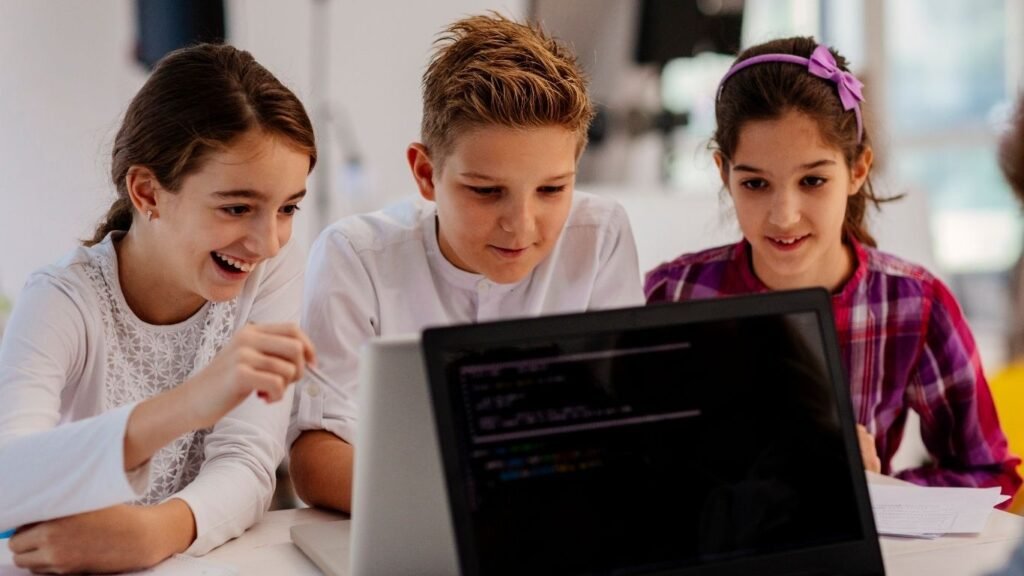
If you’ve ever wondered “is coding good for kids?”, you’re definitely not alone. With technology becoming a part of almost everything we do, many parents are curious (and sometimes confused) about whether coding is something their children should learn early on.
Let’s talk about it in a simple, real way—no complicated jargon, no pressure—just an honest conversation about why coding might be one of the most useful skills your child can explore today.
So, Is Coding Good for Kids?
Short answer? Yes, coding is good for kids.
But let’s not stop there. The real question is why it’s good and how it helps your child grow—not just academically, but mentally and creatively too.
Think of coding as more than just typing lines of text on a screen. It’s actually a way of thinking. When kids learn to code, they’re learning how to solve problems, think logically, and express ideas in a structured way.
Coding Helps Kids Think Better
One of the biggest benefits of coding is how it improves thinking skills.
When a child writes code, they’re basically giving instructions to a computer. If something doesn’t work (which happens a lot—and that’s okay), they need to figure out why. This process teaches:
Logical thinking
Problem-solving
Patience
Attention to detail
Instead of getting frustrated, kids slowly learn how to break problems into smaller parts and solve them step by step. That’s a life skill—not just a coding skill.
It Boosts Creativity
A lot of people assume coding is all about logic and numbers. But here’s the interesting part—it’s actually very creative.
Kids can use coding to:
Build games
Create animations
Design simple apps
Tell stories in interactive ways
Imagine your child creating their own mini-game or animated story. That’s not just learning—that’s self-expression.
At EduPodz Junior, the focus is exactly this: helping kids learn coding in a fun, creative way instead of making it feel like another school subject.
Builds Confidence Through Small Wins
Every time a child successfully writes a piece of code that works, it gives them a sense of achievement.
These small wins add up.
At first, it might be something simple like making a character move on screen. Then maybe creating a basic game. Over time, kids start thinking:
“Hey, I can actually build things!”
That confidence can spill over into other areas—school, communication, and even social interactions.
Coding Prepares Kids for the Future
Let’s be honest—the world is becoming more digital every day.
Even if your child doesn’t grow up to be a programmer, understanding how technology works is going to be useful in almost every field.
From business and design to science and even art—technology is everywhere.
Learning coding early:
Makes kids comfortable with technology
Gives them a head start
Helps them adapt to future careers
So when you ask “is coding good for kids?”, another way to think about it is: Is preparing them for the future a good idea? Absolutely.
Improves Focus and Patience
Coding doesn’t always work perfectly on the first try.
And that’s actually a good thing.
Kids learn:
How to stay focused
How to try again
How to fix mistakes
This builds patience in a natural way. Instead of being told to “focus,” they want to focus because they’re trying to make something work.
Encourages Independent Learning
One of the best things about coding is that kids quickly become independent learners.
They start exploring:
“What happens if I change this?”
“Can I make it better?”
“What else can I build?”
This curiosity-driven learning is powerful.
At EduPodz Junior, the goal is not just to teach coding—but to help kids become curious thinkers who enjoy learning on their own.
Is Coding Too Difficult for Kids?
This is a common concern.
The truth is—coding today is designed to be beginner-friendly, especially for kids.
There are platforms and teaching methods that use:
Visual blocks instead of complex text
Games and storytelling
Step-by-step guidance
So kids don’t feel overwhelmed. Instead, they feel like they’re playing and creating.
The key is starting with the right approach—and that’s where structured programs like EduPodz Junior come in.
What’s the Right Age to Start Coding?
There’s no “perfect” age, but many kids can start learning basic coding concepts as early as 6–8 years old.
At that stage, it’s less about coding syntax and more about:
Understanding sequences
Recognizing patterns
Building simple logic
As they grow, they can gradually move to more advanced concepts.
How EduPodz Junior Makes Coding Fun?
Let’s talk about something important—how coding is taught matters just as much as what is taught.
EduPodz Junior focuses on:
Interactive learning
Fun, game-based lessons
Age-appropriate curriculum
Supportive guidance
Instead of making kids memorize things, they learn by doing.
It feels less like a class and more like an adventure where they build something new each time.
Common Myths About Coding for Kids
Let’s clear up a few misconceptions:
“Coding is only for tech geniuses.”
Not true. Any child can learn coding with the right guidance.
“It’s too early for my child.”
Kids are naturally curious—coding simply channels that curiosity.
“It will increase screen time.”
Quality matters more than quantity. Learning to create is very different from passive screen use.
Final Thoughts: Is Coding Good for Kids?
Coming back to our main question—is coding good for kids?
Yes, and in more ways than one.
It helps them:
Think clearly
Solve problems
Build confidence
Express creativity
Prepare for the future
And when taught the right way, it’s not stressful—it’s exciting.
If you’re looking for a way to help your child learn something meaningful while still having fun, coding is a great place to start.
And with platforms like EduPodz Junior, your child doesn’t just learn coding—they learn how to think, create, and grow.
If you’re still unsure, here’s a simple way to think about it:
Coding isn’t just about computers. It’s about helping kids understand the world—and build their place in it.
FAQs: Is Coding Good for Kids?
Is coding good for kids at a young age?
Yes, coding is good for kids even at a young age. Children as early as 6–8 years old can start learning basic coding concepts through fun, interactive methods like games and visual programming. It helps them develop logical thinking and problem-solving skills early on.
Why is coding important for kids today?
Coding is important because we live in a digital world. When kids learn coding, they understand how technology works instead of just using it. This prepares them for future careers and builds essential life skills like creativity, critical thinking, and adaptability.
Is coding difficult for kids to learn?
Not at all. Coding for kids is designed to be simple and engaging. Many beginner-friendly platforms use drag-and-drop tools, storytelling, and games to make learning easy and enjoyable. With the right guidance, any child can learn coding.
Is coding good for kids who are not academically strong?
Absolutely. Coding is not just about academics—it’s about thinking and creativity. Many kids who struggle in traditional subjects find coding more engaging and confidence-boosting.
Can coding help improve my child’s confidence?
Yes, definitely. Every time kids build something that works, it gives them a sense of achievement. These small successes gradually build strong confidence.