
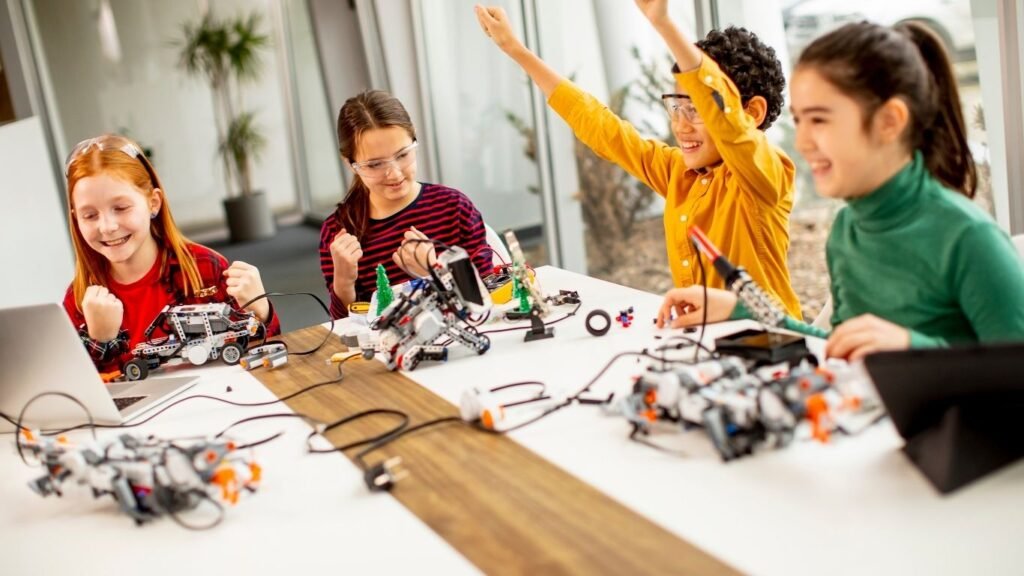
The future belongs to those who can create, not just consume technology. And the best time to start building those skills is during childhood.
Robot programming for kids introduces children to the world of coding, logic, and innovation in a way that feels exciting—not overwhelming. It helps them develop confidence, creativity, and problem-solving abilities that go far beyond the classroom. With the right guidance from Edupodz Junior, kids don’t just learn—they start building the future.
What is Robot Programming for Kids?
Let’s keep it simple.
Robot programming for kids means teaching children how to:
- Build robots using simple tools or kits
- Give instructions (coding) to make robots move or act
- Solve problems using logic and creativity
Instead of just playing games, kids become creators. They learn how things work behind the scenes—and that’s a powerful shift.
Think of it like this: instead of watching a robot move, your child learns how to make it move.
Why is Robot Programming Important for Kids?
You might wonder—why start so early?
The answer is simple: kids learn best when they’re young, curious, and fearless.
1. Builds Strong Problem-Solving Skills
When kids program a robot, things don’t always work perfectly the first time. That’s actually a good thing. They learn to:
- Identify problems
- Try different solutions
- Think logically
This kind of thinking helps in academics and real life.
2. Encourages Creativity
Robot programming isn’t just technical—it’s creative too. Kids can design robots to:
- Dance
- Follow a path
- Avoid obstacles
- Even interact with people
It’s like combining art and science.
3. Boosts Confidence
When a child builds and programs something successfully, it creates a strong sense of achievement. They start believing:
“I can create things. I can solve problems.”
And that confidence stays with them.
How Robot Programming for Kids Works?
At first glance, robotics might seem complicated—but for kids, it’s made simple and fun.
Step 1: Understanding Basics
Kids start with simple concepts like:
- Directions (forward, backward, left, right)
- Sequences (step-by-step instructions)
- Cause and effect
Step 2: Learning Beginner Coding
They use easy, visual coding platforms where they:
- Drag and drop commands
- Create simple programs
- Test their ideas instantly
Step 3: Building Robots
Using beginner-friendly kits, kids:
- Assemble parts
- Connect components
- Bring their ideas to life
Step 4: Programming Actions
Now comes the fun part—making the robot do something:
- Move
- Detect objects
- Follow commands
It’s learning by doing—and kids love that.
What Age is Best to Start?
A common question parents ask is: “Is my child too young?”
The truth is, kids as young as 6–7 years old can start learning robot programming. The key is to begin with age-appropriate tools and teaching methods.
At Edupodz Junior, programs are designed to match different age groups, so children learn comfortably without feeling overwhelmed.
Skills Kids Learn Through Robot Programming
Robot programming for kids is not just about robots—it’s about building future-ready skills.
Logical Thinking
Kids learn how to think step-by-step and make decisions.
Coding Fundamentals
They understand the basics of programming, which is useful in many careers.
Teamwork
Many robotics activities involve collaboration, helping kids work with others.
Patience and Persistence
Not everything works instantly—and that’s where real learning happens.
Real-World Benefits of Learning Robotics Early
Let’s connect this to the bigger picture.
Children who learn robot programming early are better prepared for careers in:
- Technology
- Engineering
- Artificial Intelligence
- Game development
But even if they don’t choose these careers, the skills they gain—like critical thinking and creativity—are valuable everywhere.
How Edupodz Junior Makes Learning Fun?
Learning robotics shouldn’t feel like a classroom lecture. It should feel like an adventure.
That’s exactly what Edupodz Junior focuses on.
Interactive Learning
Kids don’t just listen—they build, test, and explore.
Step-by-Step Guidance
Every concept is explained in a simple and easy-to-understand way.
Real Projects
Children work on fun projects that keep them engaged and excited.
Safe Learning Environment
Kids are encouraged to experiment, make mistakes, and learn without fear.
Common Myths About Robot Programming for Kids
Let’s clear up a few misconceptions.
My child needs to be a genius.
Not at all. Robotics is for every child, not just top students.
It’s too technical.
Modern tools are designed to be simple and beginner-friendly.
It’s only for older kids.
Even young children can start with basic robotics concepts.
Tips for Parents to Get Started
If you’re thinking about introducing your child to robot programming, here are a few simple tips:
- Start small—don’t overwhelm them
- Choose programs designed for kids
- Encourage curiosity and questions
- Focus on fun, not perfection
And most importantly, let them explore at their own pace.
The Future Belongs to Creators
We’re moving towards a world where technology is everywhere. The question is—will your child just use technology, or will they create it?
Robot programming for kids opens that door.
It transforms kids from passive users into active creators. It teaches them not just how things work—but how to build something new.
Final Thoughts
If you want your child to develop skills that truly matter in the future, robot programming is one of the best places to start.
It’s not just about robots.
It’s about thinking differently.
It’s about building confidence.
It’s about preparing for tomorrow.
With the right guidance from platforms like Edupodz Junior, your child can begin this exciting journey in a fun, engaging, and meaningful way.
FAQs: Robot Programming for Kids
Is robot programming safe for kids?
Yes, absolutely. Programs are designed with child-friendly tools and safe learning environments.
Does my child need prior coding knowledge?
No. Beginners can start from scratch with simple concepts.
How long does it take to learn?
Learning is gradual. Kids can start seeing results within a few sessions.
What tools are used in robotics for kids?
Beginner kits, visual coding platforms, and simple programming interfaces are commonly used.
Can robotics help in school studies?
Yes, it improves problem-solving, math skills, and logical thinking.